
How to Measure Yourself for Linen Clothing
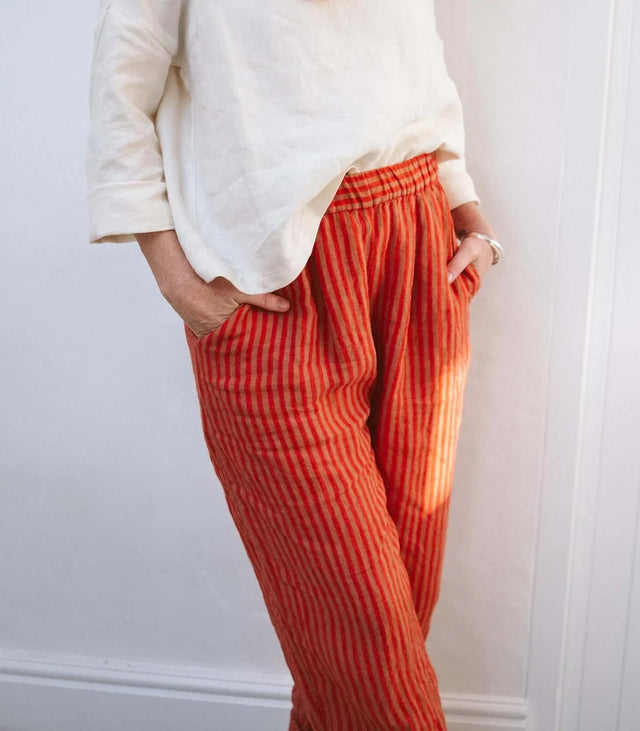
We can’t deny that shopping online is the new normal. It’s accessible, convenient, and places thousands of options right at your fingertips. But, it’s also safe to say that everyone has ordered something they love, only for it not to fit quite right. Few things in life are more disappointing.
And, with linen clothing, you have to put just a little bit more thought into the size you order because it doesn’t have much stretch to it even though it does relax after an hour or two of wearing it. So, we thought we would help you avoid disappointment by putting together a helpful guide on how to take body measurements for clothing so you never choose the wrong size ever again.

What You'll Need Before You Start
A soft fabric tape measure gives you the most accurate reading, because it follows the curves of the body the way a garment does. Wear a thin layer or the bra you usually wear, stand in front of a mirror with your feet together, and keep your shoulders relaxed. Asking a friend to help you makes the longer measurements easier, though you can manage on your own with a little patience.
Write everything down in centimetres. All our size charts are in centimetres, so you'll be able to compare your numbers directly with each piece.
How to Measure Yourself for Clothes
Take each measurement twice and use the larger number if they differ. Keep the tape level and snug against the body, with enough room to slide a finger underneath.
Bust
Wrap the tape around the fullest part of your bust, under your arms and straight across your back. Breathe normally while you read the number, so it reflects how you'll feel wearing the piece through the day.
Waist
Your natural waist is the narrowest part of your torso, usually a little above your belly button. If you're unsure where it sits, bend gently to one side and notice the crease that forms. That is your natural waist. Measure with your stomach relaxed.
Hips
Stand with your feet together and measure around the fullest part of your hips and seat, usually about 20cm below your waist. This is the number that matters most for skirts, dresses with a fitted hip, and pants with a more structured cut.
Thigh
Measure around the fullest part of one upper thigh. It's a useful number for tapered and barrel leg shapes, where the fit through the leg shapes the whole silhouette.
Length and rise
For pants, the easiest length to check is one you already love. Lay a favourite pair flat and measure from the waistband to the hem, then from the waistband to the crotch seam for the rise. These two numbers tell you more about how a new pair will sit than any height chart.
The same idea works for everything in your wardrobe. Lay a dress or top that fits you well flat on a table, measure straight across the chest from armpit to armpit, and double it. That gives you a garment bust measurement you can compare with ours.
Body Measurements and Garment Measurements
Every Titch product page lists garment measurements which indicate the dimensions of the piece itself, measured flat and given in centimetres. Your body measurements are your starting point, and the gap between the two is called ease. Ease is the room a piece needs to move with you, and it's what gives linen its relaxed, easy drape.
Dresses and tops
Linen is a woven fabric with no stretch, so allow at least 8–10cm of ease around the bust. If your bust measures 88cm, look for a garment bust of around 96–98cm. On our Long Sleeve Drop Waist Dress for example, that points you to a medium, which measures 97cm across the bust.
This is also where a bit of personal preference comes in. You can always size up if you like a looser fit in general, but we wouldn’t recommend sizing down as you may find yourself a bit constricted and putting unwanted tension on the garment and seams.
For pieces cut with generous volume, such as an oversized shirt, the ease is already part of the design. Take your usual size and let the shape do its work.
Pants with an elasticated waist
For pants like our Bakoven balloon pants, we list the waist both un-stretched and stretched. Choose a size where the un-stretched elastic is 95-100% of your waist measurement. With an 80cm waist, that's an un-stretched elastic of 76-80cm, which covers our L and XL. Closer to 95% feels snug and secure; closer to 100% feels soft and easy. Then check the hip measurement to make sure there's comfortable room for easy movement. You want at least 10cm of room around the hips to allow for movement and sitting.
If you have a small waist and more voluminous hips, you’ll also want to make sure that you can pull the elastic waistband over your hips. Check the stretched waistband measurement against your hip measurement.


Pants with a zip and structured front
Our Heron barrel leg pants have a zipped fly and elastic only at the back, so the hip and thigh measurements matter most. Look for a garment hip a few centimetres larger than your own, and use the thigh measurement to check the shape through the leg. The waist measurement should be equal to your waist measurement as there’s very little stretch in the elastic.
How Linen Fits Over Time
Linen softens and relaxes the more you wear and wash it, settling into the shape of your body over the first few months. Our fabric is pre-washed before it's cut, though a little shrinkage can happen in the first wash, so wash your linen in cold water and let it dry naturally.
When You're Between Sizes
Look at where the piece is meant to fit closely. For a dress or top, let your bust and shoulders guide you and choose the size that gives you that 8–10cm of ease. For pants, your waist and hips decide it, and an elasticated waist gives you a little flexibility either way.
If you're still unsure, we're happy to help. Many of our pieces are made to order, and if your size or colour isn't in stock, we can encourage you to place a pre-order for it. Get in touch with your measurements and we'll help you choose. You can also order fabric swatches to see and feel a colour before you decide.
Find Your Perfect Titch Fit
With your measurements written down, you’re ready to choose with confidence. Every piece in our linen clothing for women lists its garment measurements, and each one is made locally in South Africa to be worn and loved for years.
If you’d like a second opinion, send us your measurements and we’ll help you find your size.
Common Questions about Linen Sizing
Is it better to size up or down in linen?
Linen has no stretch, so let the garment measurements guide you. For dresses and tops, choose the size that gives you 8–10cm of room around the bust, and size up if you're between two. For relaxed shapes like our Piper pants or Bakoven balloon pants, your usual size gives the intended look, and you can size down for a little less volume.
Is linen supposed to be baggy?
Linen looks its best with a little room. A relaxed cut lets the fabric drape and move with you, which is where its easy, lived-in beauty comes from. That ease can be generous or subtle: our Piper pants are cut full and slouchy, while the Heron barrel leg pants have a neater, more tailored line.
Does linen shrink or stretch out?
Unwashed linen can shrink in its first wash, which is why all our fabric is pre-washed before it's cut. You may see a slight tightening after the first wash at home, and very little after that. Linen holds its shape well and relaxes gently with wear, then settles back after washing.
Does linen get looser with wear?
Yes, a little. Over a day the fibres soften and the fabric relaxes, especially at the knees, seat and waist, then it returns to shape in the wash. It's worth keeping in mind for pants: if you're between sizes in a closer-fitting style, the one that feels slightly snug on the first wear will soon feel just right.
Can you restretch linen after it shrinks?
A little. Dampen the piece, gently ease it back into shape by hand, and let it dry flat or on a hanger. Ironing with plenty of steam while it's still slightly damp helps it relax further. Large shrinkage from a hot wash or tumble dryer is hard to undo, so washing your linen in cold water and drying it naturally is the best way to keep it true to size.