
How to Care for Your Linen Bedding
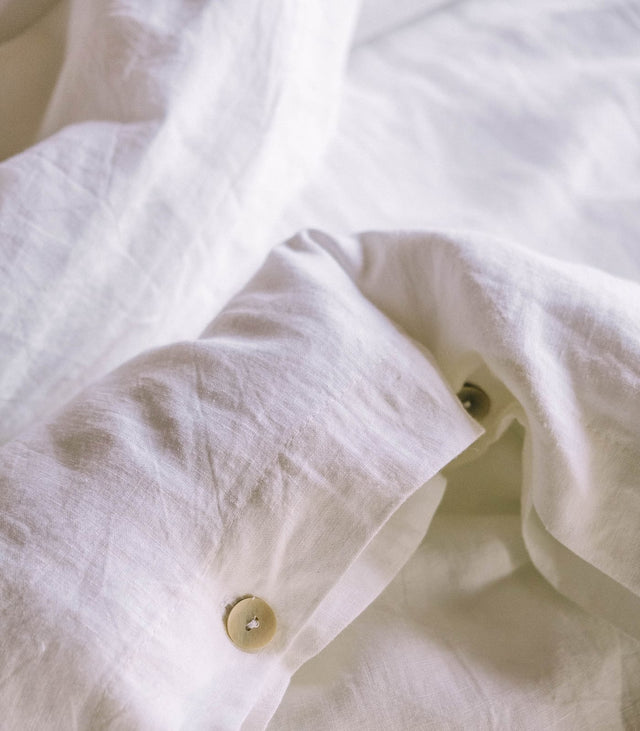
Despite what many people think, linen is surprisingly low maintenance, but there are certain ways to care for it that helps you get the most out of it. Wash it the right way, dry it well, and store it properly, and it will reward you with decades of use and a texture that just gets better and better with age.
What to Do Before You Put Your New Linen Bedding on Your Bed
It’s always a good idea to wash new linen bedding before you use it for the first time. Fresh out of the packaging, it can carry residue from the production process, and a first wash clears that up and finishes the softening process properly.
When it comes to shrinkage, it helps to know what you're buying. Some linen bedding is untreated, meaning it will shrink noticeably in the first wash and needs to be bought with that in mind. Enzyme-washed linen has been through a process that pre-softens the fibres and removes some of the natural stiffness, giving it a softer feel from the start. Pre-shrunk linen has been washed during production so the fabric has already contracted, which means there is little to no risk of it shrinking further.
Titch linen bedding is both enzyme washed and pre-shrunk, so you won't see significant shrinkage after your first wash. That said, washing your linen sheets and bedding in hot water can still cause it to contract, so a cold or warm gentle cycle should be standard practice regardless of how the fabric was treated.

Washing Your Linen Bedding
A cold or warm gentle cycle is all your linen bedding needs. As a rule of thumb, keep the temperature below 40°C. Anything hotter puts unnecessary stress on the fibres and, as we mentioned before, can cause shrinkage even in pre-shrunk linen.
A mild, fragrance-free detergent without optical brighteners is the best choice for linen. Optical brighteners are chemical agents added to many mainstream detergents to make whites appear whiter, but they work by leaving a residue on the fabric that reacts to UV light, and over time that residue builds up and dulls the natural colour of your linen. If you're washing white or natural linen, a detergent with optical brighteners won't cause visible harm, but for any coloured linen it will gradually affect the tone. If you have sensitive skin, a non-biological detergent is the gentler option as it doesn't contain enzymes that can sometimes irritate the skin.
Skip the fabric softener entirely. Linen softens naturally with every wash and doesn't need any help. Fabric softener coats the fibres and actually slows that natural softening process down rather than speeding it up. Plus, its full of all kinds of unnatural colours, fragrances, and who knows what else and we don’t want that on our skin, our bedding, or in the environment.
Lastly, don't overload the machine. Linen needs room to move freely in the drum. A tightly packed machine means the fabric doesn't rinse properly and comes out with more creases than necessary (and we all know linen loves to crease, but that’s one of the reasons we love it). Keep the load to three-quarters full at most, and separate lights from darks as you would with any other bedding.
Read: Why Linen Bedding is Worth Every Cent
How Often Should You Wash Your Linen Sheets and Duvet Cover
Sheets and pillowcases need washing more frequently than your duvet cover because they're in direct contact with your skin every night. Even if you shower before bed, your body sheds skin cells, produces natural oils, and sweats during sleep, all of which accumulate in the fabric over time. For sheets and pillowcases, washing once a week to once a fortnight is the right range depending on your personal preference.
Duvet covers sit over your inner duvet and have less direct skin contact, so every two to four weeks is usually sufficient. If you're prone to sleeping hot or it's the middle of a South African summer, washing more frequently keeps everything fresher, of course.
The easiest way to manage this without it becoming a chore is to own two sets. One goes on the bed while the other is in the wash or stored, and you rotate between them. It also means your bedding gets more wash cycles over its lifetime, which is a good thing for linen.
Drying Your Linen Bedding
Line drying is the best option for linen bedding. Fresh air and natural airflow dry the fabric evenly, reduce creasing, and are gentler on the fibres than heat. If you're drying coloured linen outside, turn it inside out first. Direct sunlight will naturally bleach the fabric over time, which is fine for whites and naturals but will gradually affect deeper colours.
If you don't have outdoor space or the weather isn't cooperating, a tumble dryer on a low heat setting works well. The key is to take the bedding out while it's still slightly damp rather than fully dry. Over-drying in a tumble dryer stiffens linen and sets creases in more deeply. Finishing it off on a clothes horse or over a door for the last bit of drying gives a much better result.

Should You Iron Your Linen Bedding?
Linen creases and there is nothing we can do about it. It's just the nature of the fibre, and most people stop noticing it (and actually start loving it) once they're used to sleeping on it. The relaxed, lived-in look of linen bedding is part of what makes it feel different to a stiff cotton sheet straight out of an industrial press.
If you prefer a neater finish, you have two options. Ironing works best while the linen is still slightly damp, using a medium to hot iron with steam. At that stage it smooths out easily and takes very little effort. Ironing fully dry linen takes considerably more work and risks scorching if the iron sits in one place too long.
Steaming is the gentler alternative, and for large pieces like duvet covers it's often the more practical one too. A handheld steamer relaxes the fibres without pressing them flat, which means the linen keeps its natural texture rather than looking like it's been starched. Make sure the fabric is fully dry before you steam it, as running a steamer over damp linen can leave water spots. Work in slow, downward strokes and let the steam do the work.
If you're taking bedding straight from the dryer and want to reduce creasing without ironing or steaming at all, give each piece a firm shake before hanging it to finish drying. It won't be crease-free, but it'll be close enough for most people.
Storing Your Linen Bedding
Store your linen bedding somewhere cool, dry, and out of direct sunlight. Sunlight bleaches fabric over time, which matters less for whites and naturals but will gradually affect any coloured linen. A linen cupboard or drawer works well. Avoid storing linen in plastic bags or airtight containers, as linen is a natural fibre that needs to breathe. Trapped moisture encourages mildew and can cause yellowing over time.
Bonus tip: fold your full bedding set and store it inside one of the pillowcases. It keeps everything together, takes up less space, and means you're never hunting for the matching pillowcase when it's time to change the bed.
Titch — 100% Organic Linen Bedding in South Africa
Our linen bedding is made to be used every day, washed regularly, and kept for years. If you have any questions about caring for your Titch linen or want help finding the right set for your bedroom, get in touch.